Water care is most useful when it follows the route, the equipment and the pattern of the complaint.
Start with the existing condition
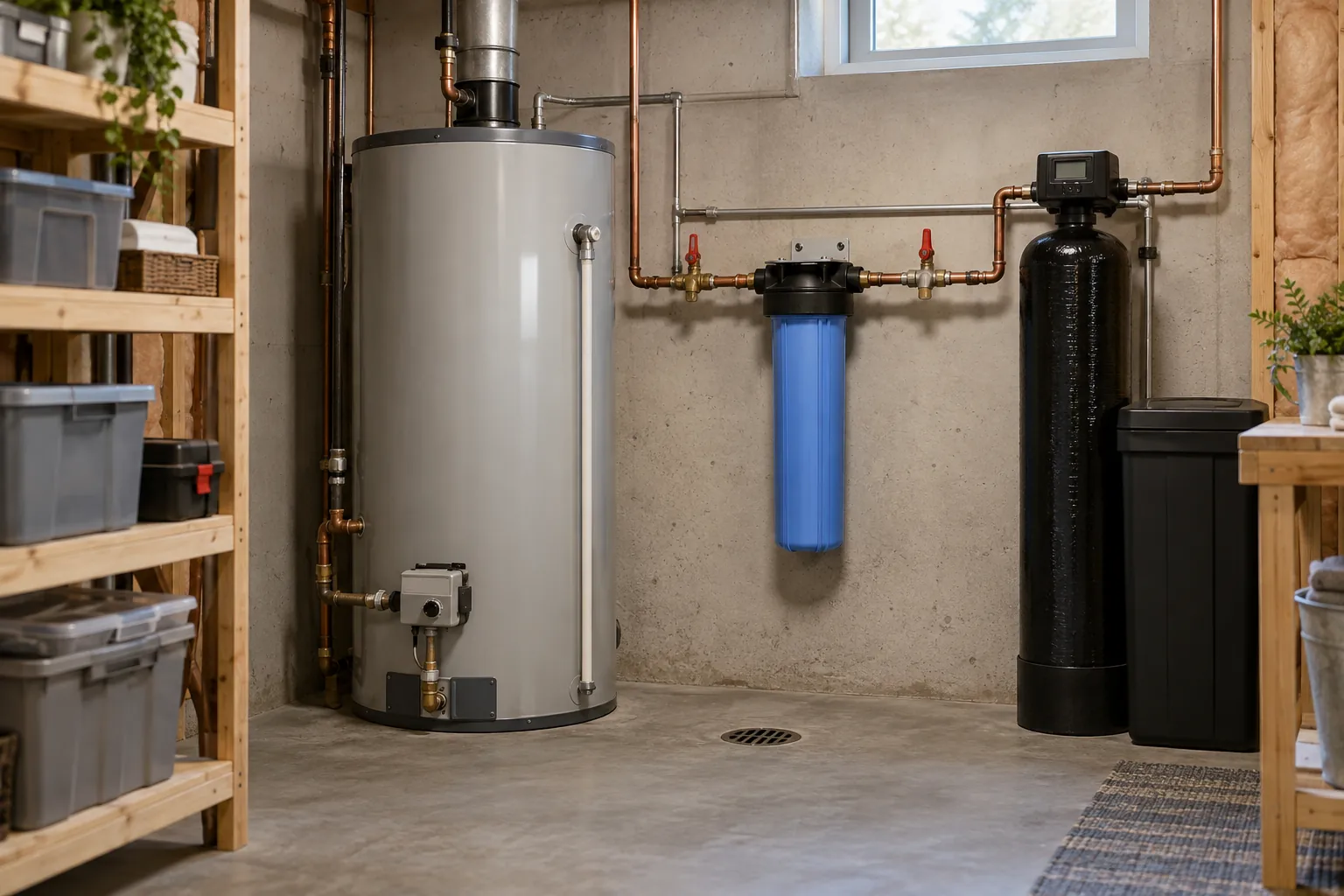
Make a simple inventory of the water heater, softener, treatment devices, accessible controls and any sump or backwater arrangement. Record model numbers and known service dates without guessing at missing history. For leaks or slow drainage, describe when the problem happens and where moisture first appears. That is more useful than a general instruction to check the plumbing.
Make the important interfaces clear
Different water problems need different questions. Pressure is not the same as flow; a blocked cartridge is not proof of a poor water source; a sump pump and a backwater valve perform different roles. Ask the provider to identify which observations or tests support the proposed care. Consumable selection and servicing should follow the installed product, with any water-quality claim tied to an appropriate assessment.
Leave a useful next step
Define what happens when routine work exposes a fault. Seized controls, damaged supplies, repeated backups and active leaks should move into a corrective proposal with clear authorization. Keep records of the sections accessed, measured conditions where relevant and unresolved limitations. A successful short functional test is useful evidence, but it is not a guarantee against a later outage, storm or concealed plumbing failure.
Choose the next useful decision
Keep source water, treatment, distribution and drainage separate in the notes. A private-water concern needs the appropriate testing route; a softener service concerns its treatment role; a slow drain concerns discharge. This distinction helps prevent a convenient service package from answering the wrong household question.
Details to bring into the conversation
- Never force an unfamiliar seized control
- Distinguish water quality from equipment condition
- Treat active flooding and contamination appropriately